
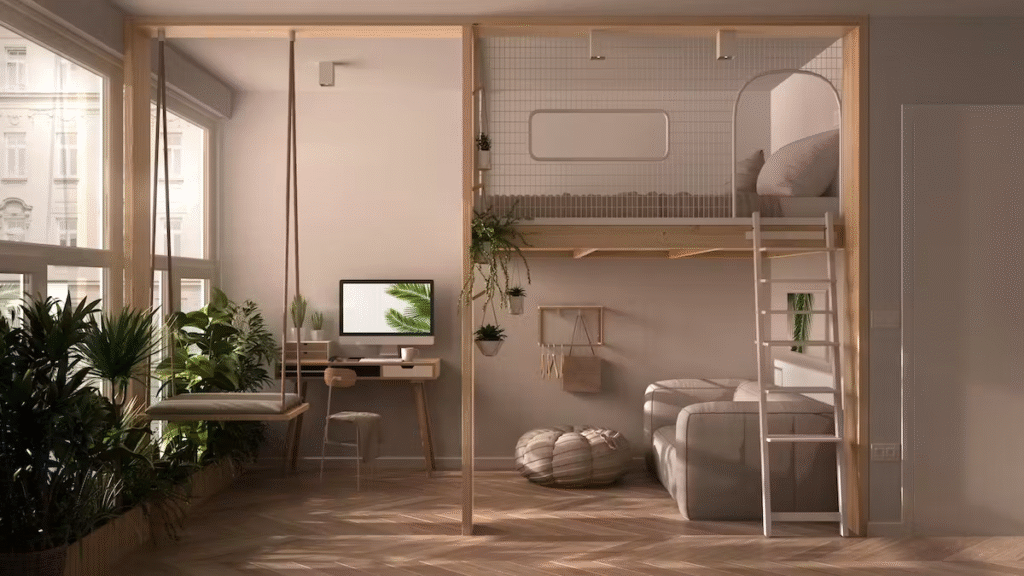
There is an invisible, high-stakes psychological game that plays out every single day when you live in a small home or apartment. It Homes starts the moment you step through the front door. If you drop your keys on the counter, kick off your shoes by the baseboard, and drape your coat over the back of a dining chair, your entire living space instantly feels like a chaotic storage locker.
In a large house, a stray laundry basket or a stack of unread mail is a minor blemish on a room’s aesthetic. In a four-hundred-square-foot studio apartment, that same stray basket is an occupying army. It completely shifts the atmospheric gravity of the home from a sanctuary of calm to a crowded storage unit.
Living small is no longer just a financial compromise or a stepping stone; for millions of us, it is a deliberate, intelligent lifestyle choice. We trade vast, empty rooms for vibrant urban neighborhoods, shorter commutes, lower utility bills, and a radically simplified footprint. Homes be completely honest with ourselves: the romantic ideal of minimalist, compact living frequently collides with the messy reality of human existence. We own things. We have hobbies, seasonal wardrobes, sentimental keepsakes, kitchen gadgets we only use during the holidays, and a collection of charging cables we are terrified to throw away.
True storage in a compact home is not about buying an array of matching plastic boxes and hiding your life out of sight. It is about spatial engineering, psychological boundary-setting, and building a continuous, predictable ecosystem where every single item works with your daily movements rather than against them. When your home is organized with genuine intent, the physical walls seem to recede. You stop living around your clutter and start living within a space that actively protects your peace of mind.
The Hard Truth of the Clean Slate: The Non-Negotiable Audit
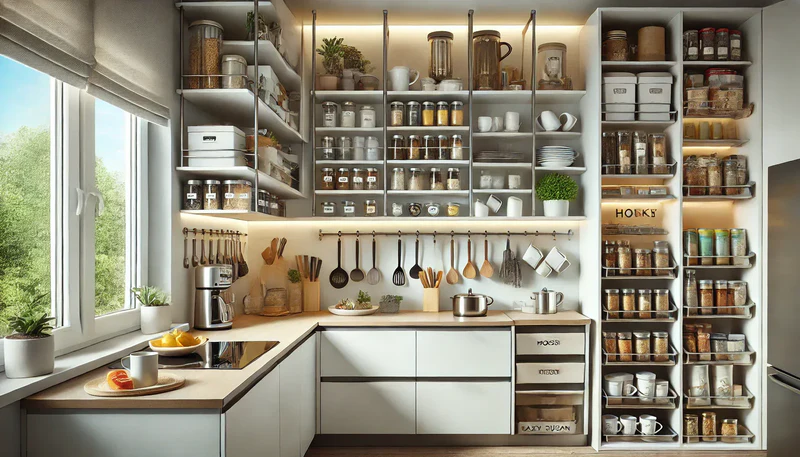
Before you open a single interior design website or spend money on organizational tools, you have to face the most uncomfortable part of small-space preservation: the deep, emotional audit of your belongings. Almost every organizational failure stems from the same basic delusion—the belief that a clever new shelf or a dynamic closet system will magically create space for things you shouldn’t even own in the first place.
We accumulate things out of guilt, aspiration, and fear. We keep books we tried to read but hated, clothes that haven’t fit properly in three years, Homes duplicate kitchen utensils we inherited from old roommates, and hobby gear for a version of ourselves that only exists in our imaginations. In a large home, this dead weight sits quietly in a basement or an attic, causing no immediate harm. In a small apartment, it actively steals your daily air supply.
An honest audit means looking at an object and asking a highly specific question: Does this item earn its rent in my current daily life? Not five years ago, and not in some hypothetical future where you suddenly become a master pastry chef. If an item does not serve your immediate Homes present, it is occupying premium real estate that should belong to your peace of mind. Decluttering a small home isn’t an act of self-deprivation; it is an act of creation. By removing the physical noise, you finally make room for the pieces of your life that truly matter.
A Strategic Framework for Reclaiming Your Floor
Once you have stripped away the excess, you can begin the process of structural configuration. Homes Reclaiming a small apartment requires a systematic approach that shifts your perspective from horizontal surfaces to vertical and hidden frontiers.
1.Shift to the Vertical Frontier:Phase 1.
Look up at your walls. The space between the top of your furniture and the ceiling is completely free real estate. Install tall, floor-to-ceiling shelving units or high floating shelves over doorways to move books, off-season items, and display pieces entirely off your walking paths.
2.Deploy Multi-Functional anchors:Phase 2.
Every piece of furniture resting on your floor must perform a double duty. Replace a standard coffee table with a Homes storage ottoman that swallows blankets, swap a basic bed frame for a hydraulic lift system or deep under-bed drawers, and choose benches with hidden compartments for your entryway.
3.Layer Your Closet Interior:Phase 3.
Stop treating your closet as a single hanging rod. Introduce vertical tiers by adding low shoe racks, double hanging rods, and clear canvas bins on the overhead shelf. Group your clothing strictly by category and frequency of use to eliminate spatial blind spots.
4.Optimize Your Daily Micro-Zones:Phase 4.
Isolate your two highest-friction areas: the kitchen and the bathroom. Install pull-out cabinet organizers, use tiered lazy Susans for spices, and mount floating shelves above the toilet. Keep your counters entirely bare by assigning permanent, reachable homes for daily essentials.
The Furniture Compromise: Making Your Floor Pieces Earn Their Keep of Homes

When floor space is at a premium, a piece of furniture that only serves a single purpose is a luxury you simply cannot afford. Every couch, table, and chair needs to be evaluated based on its spatial footprint versus its functional utility.
| Piece of Furniture | Traditional Mistake | The Small-Space Solution |
| The Bed | Decorative four-poster frame with empty, dusty dead space underneath. | A platform bed with built-in deep-rolling drawers or a full hydraulic lift frame. |
| The Living Room Table | A heavy, solid wood coffee table that blocks traffic lanes. | A nesting set of slim tables or a hollow storage ottoman that holds extra linens. |
| The Entry Seating | A bulky accent chair that quickly becomes a messy clothes dumping ground. | A narrow flip-top storage bench that provides seating and hides muddy shoes. |
| The Dining Setup | A fixed four-person table that sits unused for twenty hours a day. | A wall-mounted drop-leaf table or an extendable console that expands only when needed. |
By prioritizing pieces that conceal their storage capabilities beneath clean, minimalist lines, you maintain the visual illusion of lightness. A room filled with visible storage units—like freestanding plastic drawers or wire racks—can look like a warehouse and induce anxiety. But when that storage is elegantly integrated into a beautiful sofa base or a textured linen ottoman, the room retains its residential warmth while quietly swallowing your clutter.
The Secret Geometry of Deep Storage: Under the Bed and Over the Cabinets of Homes
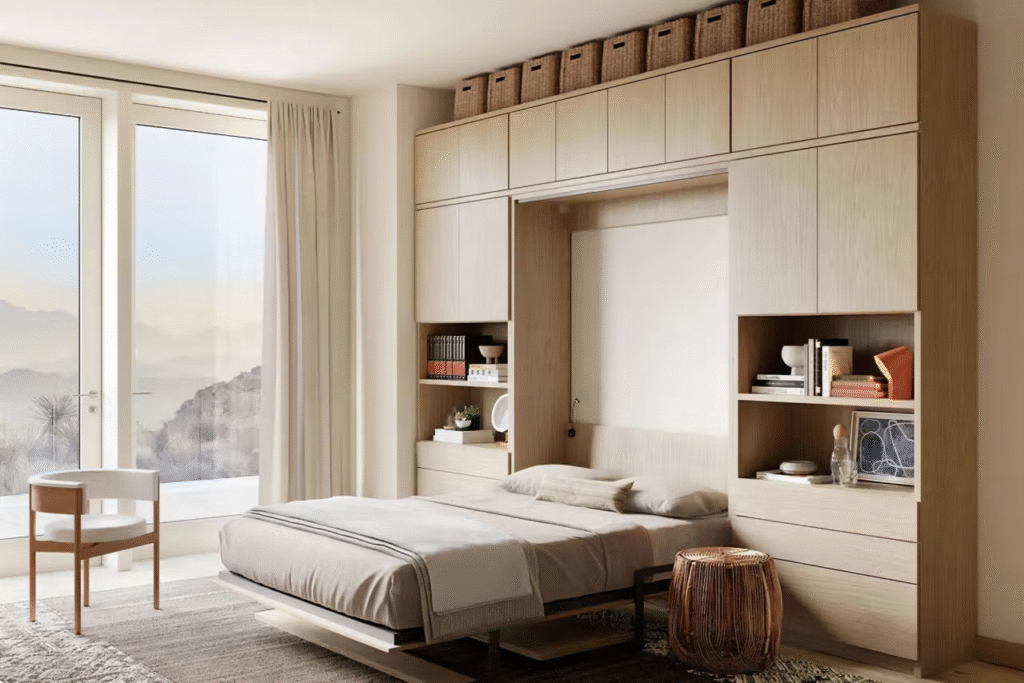
The most common mistake in small-home management is focusing only on what is directly at Homes eye level. To truly master a compact footprint, you have to look for the hidden zones that mass-market design often ignores. The most prominent example is the massive, empty void underneath your mattress.
The Under-Bed Protocol: The space under a standard queen bed is roughly thirty square feet of prime, horizontal storage territory. It should never be a chaotic Homes landing strip for loose shoes and dust bunnies. Instead, treat it like an horizontal wardrobe. Use long, shallow, wheels-equipped bins made of clear plastic or heavy canvas to store items that belong to a different season—heavy winter sweaters, holiday decorations, extra duvet inserts, or travel luggage.
                     [ THE KITCHEN COMPARTMENT ]
                                  │
         ┌────────────────────────┴────────────────────────┐
         ▼                                                 ▼
 ┌────────────────┐                               ┌────────────────┐
 │ THE UPPER VOID │                               │ LOWER CABINETS │
 ├────────────────┤                               ├────────────────┤
 │ • Deep baskets │                               │ • Pull-out bins│
 │ • Rare gadgets │                               │ • Tiered trays │
 │ • Out of sight │                               │ • Active tools │
 └────────────────┘                               └────────────────┘
The exact same logic applies to the kitchen. Most standard apartment kitchens feature cabinetry that stops roughly twelve to eighteen inches short of the ceiling, leaving an awkward shelf that quickly gathers dust. This upper void is the ideal location for uniform, textured wicker baskets or deep canvas bins. Because these containers are high above your normal line of sight, they hide visual clutter completely. Use them to hold the specialty kitchen tools you only pull out occasionally—the heavy stand mixer, the summer canning jars, or oversized serving platters. This frees up your valuable lower cabinets for the items you reach for every single morning.
The Daily Micro-Habits That Keep the System Alive

You can buy the most advanced, beautifully engineered European storage furniture on the market, but it will completely fail within a month if your daily habits do not shift to match the realities of your architecture. Small spaces are incredibly sensitive ecosystems. They possess almost zero tolerance for procrastination. In a large suburban home, leaving your workout gear in the hallway for three days is a minor detail; in a small apartment, it means you have to step over it every time you go to the kitchen.
The most powerful habit you can build in a small home is the “one-in, one-out” rule. Because your physical storage capacity has a hard, unyielding ceiling, you must create a natural equilibrium. If you buy a new winter coat, an old jacket must be donated or sold. If you bring home three new books, three older titles must find a new home with friends or a local library. This simple practice forces you to remain a conscious, intentional gatekeeper of your environment, preventing your home from slowly filling up through passive accumulation.
Finally, build a permanent ten-minute evening reset into your bedtime routine. Before you brush your teeth, walk through your space and return every single displaced item back to its designated anchor home. Hang up the jacket, put the dishes directly into the dishwasher rather than leaving them in the sink, wipe down the bathroom counter, and fluff the couch cushions. This small habit takes less than ten minutes, but its psychological payoff is immense. It ensures that when you open your eyes the next morning, you are greeted by an open, calm, and orderly sanctuary that is ready to support your day, rather than a cluttered landscape that immediately spikes your morning cortisol levels.
Living beautifully in a small space isn’t about wishing you had more square footage; it is about respecting and maximizing the space you currently inhabit. When you treat storage as an integral part of your home’s architecture and daily philosophy, you discover that a small home doesn’t limit your lifestyle—it sharpens it, leaving you with less room for distraction and far more space for intentional living.
FAQs
1.What are the best storage solutions for small homes?
The best storage solutions include vertical shelving, under-bed storage, multi-functional furniture, closet organizers, baskets, wall-mounted shelves, and hidden storage in unused areas. These options help save space while keeping the home tidy and functional.
2.How can I make a small apartment feel less cluttered?
Start by decluttering items you do not need, then use storage solutions that keep surfaces clear. Vertical storage, baskets, bins, and furniture with built-in storage can make a small apartment feel much more open and organized.
3.Is multi-functional furniture worth it for small spaces?
Yes, multi-functional furniture is one of the smartest choices for small homes. It saves space by combining storage with another function, such as seating, sleeping, or serving as a table.
4.What is the easiest place to add storage in a small bedroom?
Under the bed is one of the easiest and most effective places to add storage. You can use bins, drawers, or storage bags for seasonal clothing, extra bedding, shoes, or other items that do not need daily access.
5.How do I organize a small kitchen efficiently?
Use cabinet organizers, drawer dividers, stackable containers, wall racks, and shelf risers. Keep only the items you use regularly and store them where they are easiest to reach.