
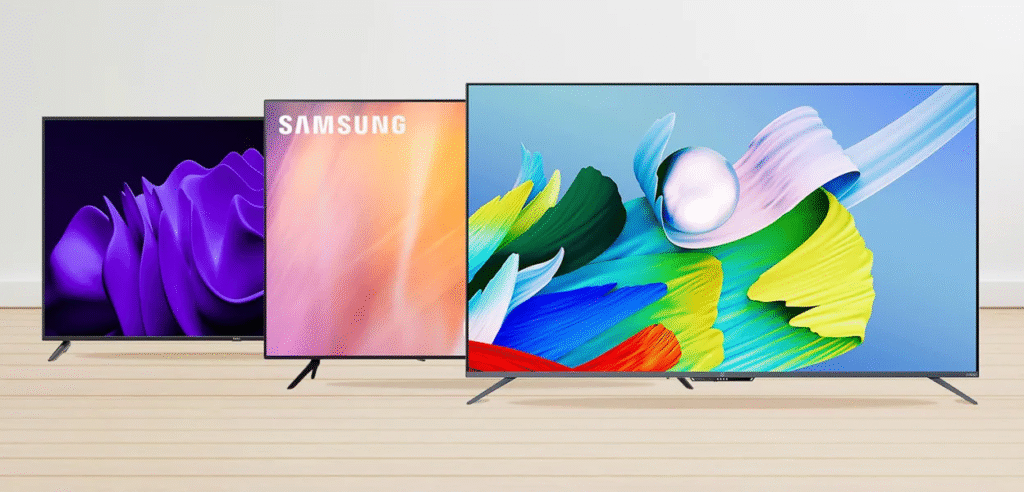
Let’s be completely transparent about the current state of home entertainment. Walking into a modern tech store or scrolling through endless pages of online retail listings to buy a new television is an exercise in pure sensory overwhelm. You are instantly bombarded by a dizzying, frustrating wall of meaningless corporate acronyms—QLED, OLED, Mini-LED, HDR10+, Dolby Vision—alongside massive price gaps that seem to make absolutely no sense at first glance. Why on earth does one 65-inch Smart screen cost a mere three hundred dollars while the one sitting directly next to it on the showroom floor commands a staggering two thousand dollars?
The simple truth is that the television market has shifted dramatically and permanently over the last few years. The baseline quality of entry-level budget screens has skyrocketed across the board, meaning you no longer have to drop an entire month’s rent just to get a gorgeous, crisp, vibrant picture that makes your favorite movies truly pop. However, the modern marketplace is also entirely filled with hidden traps—including outdated processors that make smart menus lag and stutter, terrible built-in speakers that sound like tin cans, and highly deceptive marketing buzzwords explicitly designed to sell mediocre display panels to unsuspecting buyers.
Finding the perfect smart TV for your household isn’t about blindly chasing the highest available price tag or settling for the cheapest bargain-bin deal you can find on Black Friday. It is about deeply understanding exactly what you are paying for and matching the underlying display technology to your actual, everyday living room habits. Let’s strip away the corporate marketing speak once and for all and break down the absolute best smart TV options available right now across three distinct, realistic budgets so you can maximize every single dollar of your hard-earned cash.
The Budget Bracket: Incredible 4K Smart Screens That Keep Cash in Your Pocket

There was a time not too long ago when buying a budget television meant willingly accepting a blurry screen, terrible viewing angles, and a frustratingly slow smart platform that crashed literally every time you tried to open Netflix. Thankfully, those days are entirely gone from the tech world. The modern budget tier is currently the single most competitive segment of the consumer technology industry, driven heavily by innovative brands like TCL and Hisense who are aggressively forcing premium, high-end display technology down to entry-level prices.
When you are shopping with a modest budget, your primary goal is to find a television that utilizes a trusted, well-optimized operating system like Roku, Google TV, or Fire TV. These platforms are fast, receive regular automated software updates, and ensure you don’t need to buy an external streaming stick just to navigate your apps smoothly on a daily basis. In this price range, you should absolutely expect a native 4K resolution and decent contrast performance, which is perfect for casual bedroom setups, college dorm rooms, or a secondary screen for the kids’ playroom.
The real superstar of the budget world right now is the TCL QM7-Series. It utilizes advanced Mini-LED backlighting technology, which features thousands of microscopic LEDs packed tightly behind the screen. This allows the television to get remarkably bright and control its lighting zones with high precision, offering deep blacks that look incredibly impressive during dark movie scenes. If you want an even more wallet-friendly option that focuses heavily on ultra-simple menus, the Roku Plus Series delivers a highly dependable, user-friendly 4K picture for less than the cost of a couple of grocery trips.
The Mid-Range Sweet Spot: Where Premium Smart Performance Meets Real-World Value
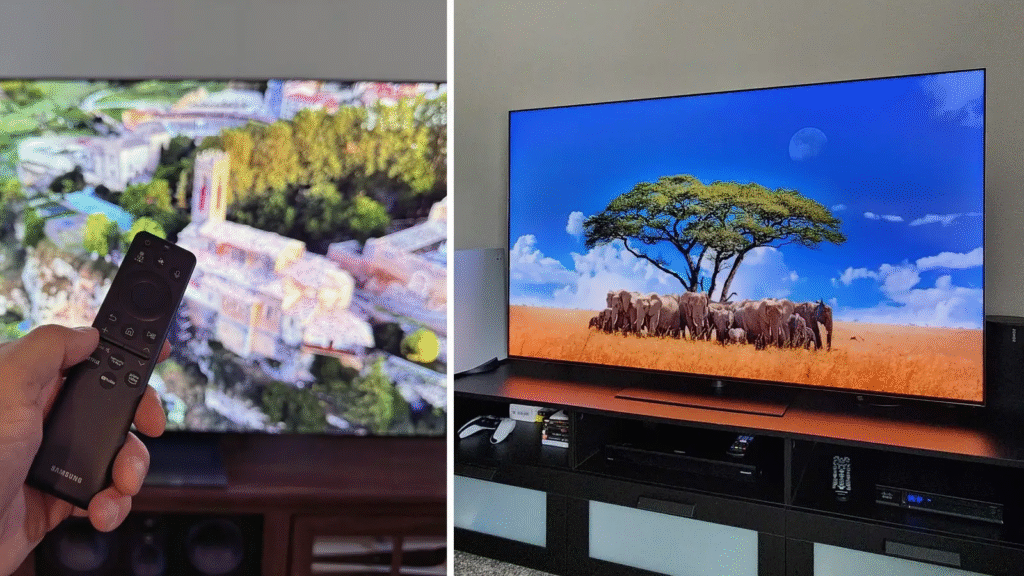
If you happen to have a bit more financial flexibility and want a television that will genuinely anchor your main living room for the next five to seven years, the mid-range bracket is where you get the absolute most bang for your buck. This tier is meticulously designed for people who love hosting cinematic movie nights, watching fast-paced live sports on Sunday afternoons, or spending their weekends gaming on high-powered modern consoles like a PlayStation 5 or Xbox Series X.
In the mid-range category, you are no longer just buying a basic screen to display an image; you are investing in crucial, game-changing performance upgrades like a native 120Hz refresh rate. A higher refresh rate means the image on your screen updates 120 times per second instead of the standard 60 times, completely eliminating the distracting motion blur and trailing artifacts that can easily ruin fast-moving sports or high-speed action films. You also gain direct access to advanced gaming features like Variable Refresh Rate (VRR), which effectively prevents screen tearing and keeps your gameplay incredibly smooth during intense moments.
The undisputed, reigning champion of this mid-range sweet spot is the Hisense U8N. This television punches way above its price class by delivering an absurd level of peak brightness that easily fights off the glare of a sunlit, window-heavy living room. Its color accuracy right out of the box is phenomenal, making cinematic HDR content look punchy, vibrant, and intensely alive. It closely mimics the performance of flagship models that cost twice as much money, making it the smartest possible choice for the vast majority of households looking for high-end quality without paying a premium brand tax.
The Flagship Tier: Uncompromising Smart Luxury for Audiophiles and Cinephiles
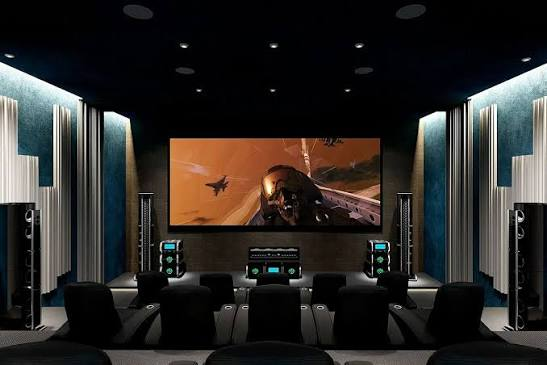
For the home theater purists who want to experience cinema exactly the way the directors originally intended, the flagship tier represents an entirely different world of visual perfection. If you are building a dedicated entertainment sanctuary, a high-end media room, or a dim, light-controlled basement home theater, this is the exact threshold where you stop compromising on backlighting and enter the elite realm of self-emissive pixel technology.
At the absolute top of the display mountain sits OLED (Organic Light Emitting Diode) technology. Unlike traditional televisions that rely on a bright, uniform backlight shining through a liquid crystal panel, every single individual pixel on an OLED screen creates its own light source and can turn completely off independently. This results in what industry experts call “infinite contrast”—when a scene goes to pitch black, those specific pixels emit zero light, creating true, deep, ink-like blacks without a single hint of the distracting gray haze or “blooming” that constantly plagues lesser screens.
If you want the absolute pinnacle of OLED technology, the LG C6 OLED or the Samsung S95F QD-OLED are the universal gold standards. These screens are impossibly, razor-thin, offer incredibly wide viewing angles so that every single seat in your room is perfect, and feature incredibly powerful AI processors that can intelligently upscale older, low-resolution content into pristine clarity. They also double as ultimate gaming monitors, boasting lightning-fast response times that make fast-paced multiplayer games feel incredibly fluid. It is an expensive investment, but the first time you watch a sci-fi film in a dark room on an OLED panel, you realize it is worth every penny.
The Smart TV Checklist: Three Things to Verify Before Clicking Buy
Before you put your credit card down on a flashy online deal or haul a massive box out of a retail store, it is vital to check a few crucial hardware specifications that manufacturers frequently hide in the fine print. Run your target model through this quick mental checklist to avoid immediate buyer’s remorse:
- Count the HDMI 2.1 Ports: If you own a modern gaming console or a high-end soundbar, you absolutely need native HDMI 2.1 ports to handle high-bandwidth signals like 4K at 120Hz. Many budget and mid-range televisions claim to support gaming features but only include one or two of these ports. Make sure the port layout fully matches your gear.
- Factor in the Soundbar Budget: As televisions have become incredibly thin over the years, the physical space available for internal speakers has completely vanished. Even a top-tier, two-thousand-dollar television will sound tinny, hollow, and disappointing on its own. Always try to set aside even a hundred dollars of your total budget for a decent external soundbar to ensure the audio matches the picture.
- Check the Smart Ecosystem: Ensure the built-in operating system aligns seamlessly with the ecosystem you already use daily. If your entire house runs on Apple devices, a television with built-in Apple AirPlay support will make your streaming life significantly easier. If you love voice commands, look for robust, native Google Assistant or Amazon Alexa integration.
Investing in a new smart television is ultimately a direct investment in your daily downtime, your entertainment health, and your family time. By focusing heavily on the underlying panel technology rather than the loud marketing hype, you can confidently steer clear of overpriced models and secure a gorgeous screen that fits your life and your budget perfectly.
FAQs
1. Which smart TV brand is the most reliable for a tight budget?
TCL and Hisense are the undisputed leaders in the budget space right now. They offer fast operating systems (like Google TV and Roku) and have aggressively brought premium features like Mini-LED backlighting down to entry-level price points.
2. Is it worth paying extra money for an OLED TV?
Yes, if you prioritize movie nights in dark rooms or high-end gaming. Because OLED pixels turn completely off, they create perfect blacks and infinite contrast with zero “blooming” (gray haze around bright objects), which standard LED TVs simply cannot replicate.
3. What is the difference between 60Hz and 120Hz refresh rates?
A 60Hz TV updates the image 60 times per second, while a 120Hz TV updates it 120 times. If you watch fast-moving sports or play games on a PS5 or Xbox Series X, a 120Hz screen is essential to eliminate distracting motion blur.
4. Can a cheap 4K TV look as good as an expensive one?
During bright, casual daytime viewing (like the news or animated shows), a budget 4K TV can look remarkably close to a premium model. The massive price gap becomes obvious during dark, dramatic movie scenes or fast gameplay, where cheaper screens struggle with contrast and motion trailing.
5. Why do all brand-new smart TVs sound so bad?
As TVs have become razor-thin, manufacturers have run out of physical space to house decent speakers. Even a flagship $2,000 screen will sound hollow and quiet on its own. Budgeting an extra $100 to $200 for a dedicated soundbar completely transforms the experience.