
If you say the words “smart home” to a group of friends, you will usually get one of two reactions.The first is a bit of a cynical eye-roll. You picture an absurdly wealthy person standing in a pristine, hyper-minimalist kitchen, arguing with an overpriced refrigerator about whether they need to buy more oat milk. It feels superficial, like a tech-bro party trick designed for people with more money than sense.
The second reaction is pure frustration. You imagine a deeply annoying digital nightmare where you are standing in your own bedroom, exhausted after a grueling twelve-hour workday, unable to turn on your bedside lamp because your Wi-Fi went down and the lightbulb is currently trying to download a firmware update.
For a very long time, tech conglomerates sold us a version of the future that felt entirely wrong. They painted a picture of tomorrow that looked less like a warm, cozy home and more like the bridge of a sterile spaceship. Everything was covered in glowing blue LEDs, everything required a voice command yelled across a silent room, and everything seemed to make simple tasks take twice as long as they used to. It was technology for the sake of technology, a solution looking for a problem.
But over the last few years, a quiet shift happened. The hype died down, the flashing neon gimmicks faded away, and smart home technology actually stopped being an expensive luxury or an erratic party trick. It grew up. It became genuinely, remarkably useful.
A real, well-designed smart home is not about filling every single outlet with pricey, complicated gadgets just to show off to your neighbors. It is about something much more human. It is about identifying those tiny, incredibly annoying friction points in your daily routine—the minor inconveniences you have just accepted as a normal, unavoidable part of being alive—and making them vanish.
When you strip away the marketing jargon and the corporate buzzwords, you realize that normal people are using this stuff in incredibly practical ways to make their days just a little bit easier, a little softer, and a lot less stressful. Here is a look at how this technology actually integrates into a regular, chaotic, beautiful human life.
The Things You’ll Actually Use Every Day
If you are standing at the edge of this world wondering where to start without blowing your hard-earned budget, throwing your back out, or losing your absolute mind, don’t worry. You don’t need a master’s degree in engineering. You just need a handful of thoughtful upgrades that actually earn their keep on a daily basis.
1. Smart Plugs: The $15 Game Changer
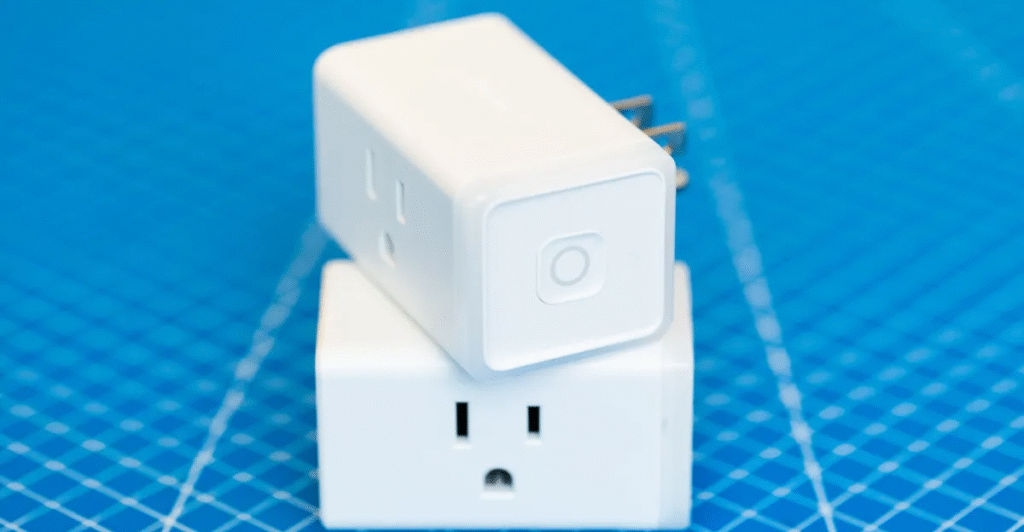
If you buy absolutely nothing else from the smart home aisle, do yourself a huge favor and buy a couple of simple smart plugs. These are the ultimate unsung heroes of home automation. The beauty of a smart plug is that it requires absolutely zero lifestyle changes. You do not have to throw away your favorite appliances, and you do not have to buy expensive, connected versions of things you already own. You just plug the smart plug into your standard wall outlet, plug your old, reliable, “dumb” device into it, and suddenly you have complete control over the power supply.
- The real-life perk: Think about how you feel first thing in the morning when the alarm goes off. Imagine plugging your kitchen kettle or your old-school drip coffee maker into one of these plugs the night before. When your eyes open, instead of immediately dragging yourself out of bed, you can turn the plug on from under the comfort of your heavy blankets using your smartphone. By the time your feet actually hit the freezing cold floor and you stumble into the kitchen, your morning caffeine is already heating up, waiting for you.Alternatively, think about that one beautiful living room lamp that sits in the corner, whose manual switch is awkwardly hidden down behind the back of a massive, heavy couch. Instead of performing a daily gymnastics routine just to turn it on, a smart plug lets you activate it with a tap or a quick word. It takes a physical annoyance and completely deletes it from your day.
2. Smart Lighting (That Isn’t Just for Parties)
Yes, if you buy color-changing smart bulbs, you can absolutely make your living room turn neon purple, strobe like a nightclub, or glow electric blue. But let’s be completely honest: that gets old after about five minutes, usually right after you finish showing it off to your friends. The real, enduring value of smart lighting has nothing to do with party tricks. It has everything to do with two subtle things: color temperature and automated scheduling.
- The real-life perk: Human beings were never meant to be jolted awake in pitch-black darkness by a screaming, aggressive alarm clock tone. With smart lighting, you can set your bedroom bulbs to mimic a natural, gentle sunrise. Over the course of 30 quiet minutes, the light slowly shifts from a deep crimson to a warm amber, and finally to a bright, crisp white. It coaxes your brain out of its sleep cycle naturally, leaving you feeling significantly less groggy.Flip that script for the evening: instead of walking around flipping harsh, blinding switches, you can program your lights to automatically dim to a soft, warm candle-like glow at 8:00 PM. It sends a biological signal to your brain that the day is ending, helping your body wind down for a deep, restful night of sleep.
3. Smart Thermostats: For the Constantly Freezing (or Overheating)
We have all played the agonizing thermostat dance at some point. You wake up in the dead of winter freezing your toes off, so you march down the hallway and crank the heat up. Then, you head out the door for work or get distracted by chores, completely forgetting about it. Hours later, you find yourself sitting on the couch sweating through your shirt, realizing you’ve spent the last four hours paying a utility company to turn your home into a sauna. A smart thermostat completely fixes this exhausting cycle simply by paying attention to when you are actually in the house.
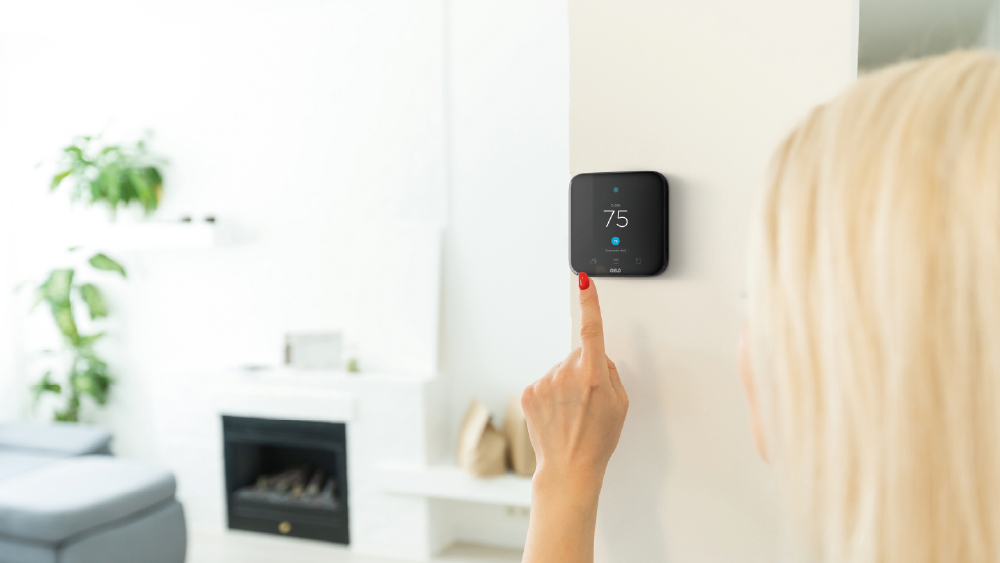
- The real-life perk: It takes a few days to watch you, and then it learns your specific routine. When the house empties out for school, work, or grocery runs, the thermostat automatically lowers the temperature so you aren’t wasting money to heat or cool an entirely empty structure. Then, right before you are scheduled to walk back through the front door, it quietly kicks back on, bringing the interior back to your perfect, golden comfort zone the exact moment you step inside. It is one of the very few technology purchases on the market that doesn’t just cost you money—it actively, literally pays for itself on your monthly energy bill over time.
4. Video Doorbells: The Ultimate Peace of Mind
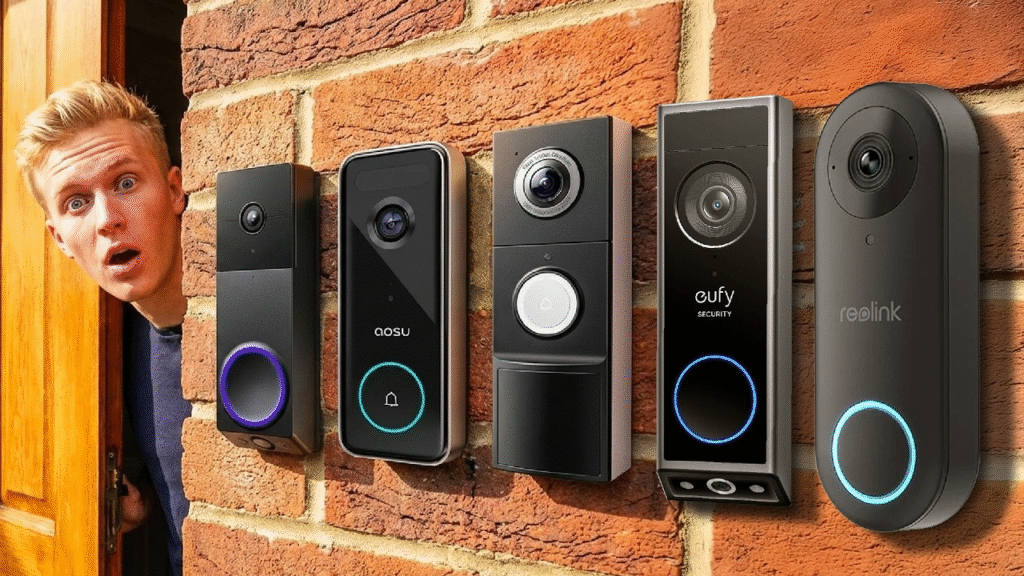
You do not need to spend thousands of dollars wrapping your home in complex, military-grade security systems, running wires through your drywall, or paying massive monthly monitoring fees to feel safe in your own space. A simple, battery-powered video doorbell completely changes the way you interact with your front door and your neighborhood.
- The real-life perk: Imagine you are stuck in an incredibly important, stressful afternoon meeting at the office, and you get a notification on your phone. A delivery driver has just arrived at your front porch with a critical, time-sensitive package you’ve been waiting on for weeks. Through the app, you can instantly see the driver, use the two-way audio to politely ask them to tuck the box safely behind the large planter box next to the steps, and then keep a protective eye on it until you pull into the driveway. It puts a definitive end to the frustration of missed delivery tags, ruined rainy packages, or the anxiety of stolen boxes off your porch.
5. Robot Vacuums: Reclaiming Your Weekends
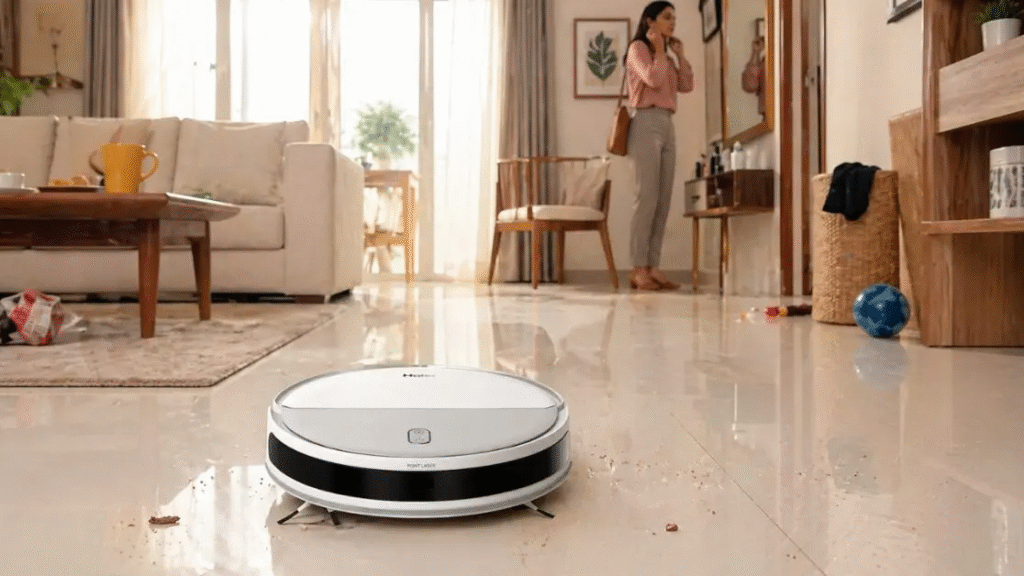
Cleaning the floors is a depressing, never-ending cycle of domestic labor. You spend an hour vacuuming every square inch of the house on Saturday morning, and by Sunday afternoon, the dust bunnies, pet hair, and snack crumbs have staged a massive comeback—especially if you share your home with young kids or shedding pets. A robot vacuum does not mean you will never have to pull out a deep-cleaning vacuum cleaner again, but it does keep the daily chaos entirely at bay.
- The real-life perk: Instead of spending your precious, hard-earned free time doing manual labor, you can schedule the little robot to run at 10:00 AM while you are out running errands, working, or grabbing coffee with a friend. You walk back through the door later in the day to find those incredibly satisfying, perfectly straight clean lines on the living room carpet. Suddenly, you have reclaimed two extra hours on your Saturday that would have otherwise been spent pushing a heavy, loud vacuum cleaner around the house.
How to Build a Smart Home Without Hating It
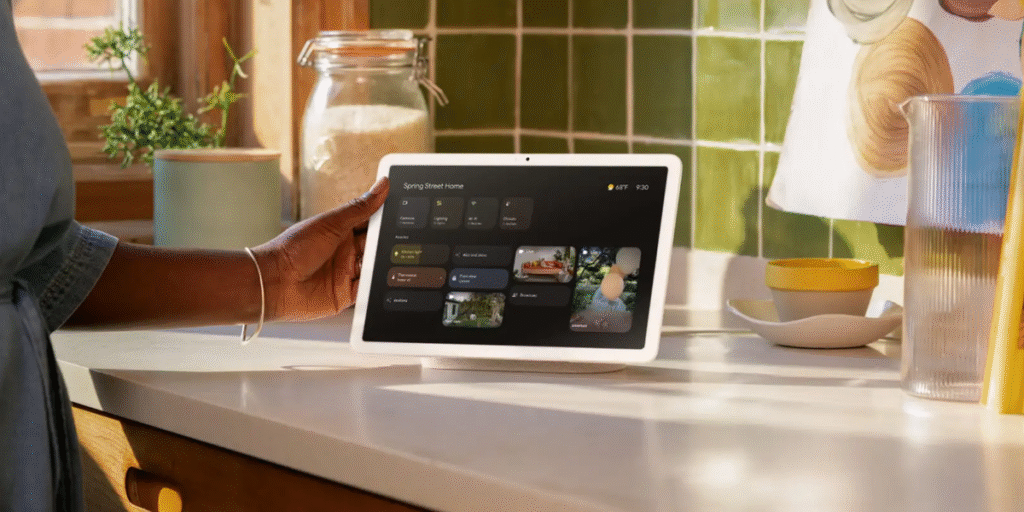
If you want to transition your living space into a smarter home, the single biggest mistake you can make is trying to do absolutely everything at once. We have all seen people get overly excited after watching a few online review videos. Smart Home They go out and buy a central hub, ten different lightbulbs, a smart lock, three cameras, and a smart sensor array. They dump it all on the dining room table, and by Saturday afternoon, their weekend is completely ruined. They are angry, surrounded by cardboard trash, trying to read three different contradictory instruction manuals, and screaming at their router because nothing will connect.
- Do you find yourself laying awake in bed at midnight, constantly worrying and stressing that you forgot to lock the front deadbolt? Don’t buy a whole tech ecosystem—just get a smart lock.
- Are your winter or summer energy bills actively hurting your family wallet every single month? Start right there with a smart thermostat.
- Do you absolutely hate stumbling around in the pitch black of night, bruising your shins on the coffee table just to find the living room light switch? Grab a simple smart speaker and a pack of two smart bulbs.
The absolute best technology on the planet is the kind you eventually forget is even there. It shouldn’t demand your constant attention, it shouldn’t require an endless stream of updates, and it shouldn’t make your life more complicated. It should just work quietly, reliably, and seamlessly in the background, making your home feel a little more welcoming, a little safer, and a whole lot more comfortable.
Frequently Asked Questions
1. Are smart home gadgets worth buying?
Yes. Many smart home gadgets save time, improve convenience, enhance home security, and reduce energy consumption. Choosing devices that fit your daily routine provides the greatest value.
2. Which smart home gadget should beginners buy first?
A smart speaker, smart plug, or smart lighting system is an excellent starting point because these devices are affordable, easy to install, and compatible with many other smart home products.
3. Do smart home gadgets require Wi-Fi?
Most smart home devices use a Wi-Fi connection to communicate with smartphone apps and voice assistants. Some products may also support Bluetooth, Zigbee, or Matter for local connectivity.
4. Can smart home devices help reduce electricity bills?
Yes. Smart thermostats, lighting systems, smart plugs, and automated schedules help reduce unnecessary energy usage, which can lower monthly electricity costs.
5. Are smart homes safe from hackers?
Most reputable smart home brands include encryption, regular software updates, and security features. Using strong passwords, enabling two-factor authentication, and keeping devices updated significantly improves security.